

Quick answer: Monsoon rains clear outdoor particulate pollution, which makes outdoor AQI numbers look good — but the resulting humidity creates ideal conditions for mould and dust mites indoors, meaning "clean outdoor air" doesn't mean clean indoor air during monsoon. Closed, damp rooms with poor airflow are the highest-risk spaces.
It's a common and reasonable assumption: monsoon means the smog clears, the AQI app finally shows green, and the air quality problem takes a seasonal break. Outdoors, that's largely true — rain is genuinely effective at washing particulate matter out of the atmosphere. Indoors, monsoon quietly creates a different problem that most households don't associate with "air quality" at all.
Why Monsoon Humidity Is an Indoor Air Problem
 Illustration generated for Kevelin
Mould needs three things to grow: moisture, organic material, and time. Monsoon supplies the first one abundantly — indoor humidity levels commonly climb well above comfortable ranges during the rainy season, especially in rooms with limited ventilation, damp walls, or fabric-heavy furnishings like curtains, mattresses, and upholstery.
Once mould establishes itself, it releases spores into the air — a genuine airborne allergen, not just a cosmetic "damp smell" issue. Common reactions include sneezing, throat irritation, and worsened symptoms for anyone with existing allergies or asthma, often mistaken for a seasonal cold rather than an air quality issue.
Dust mites also thrive in higher humidity, adding a second allergen source that scales up specifically during this season.
Rooms Most at Risk
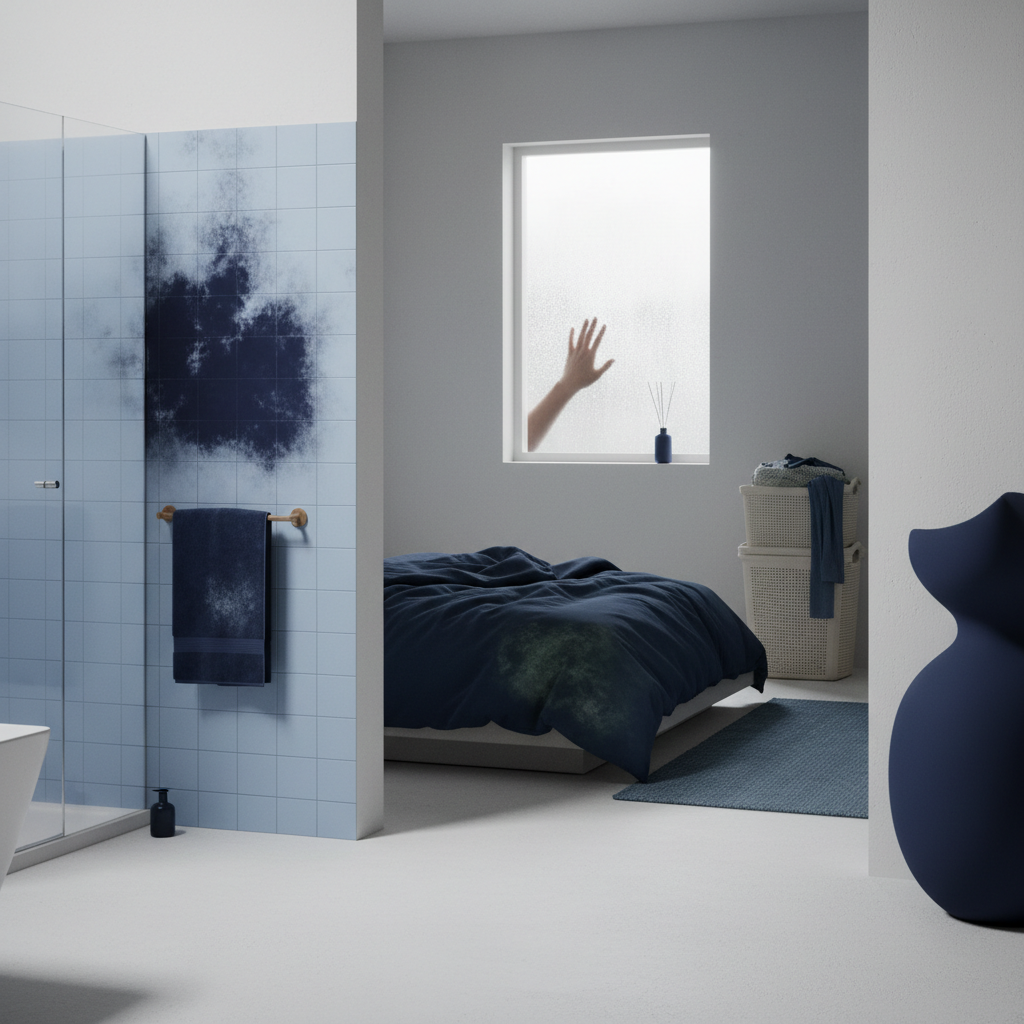 Illustration generated for Kevelin
Not every room in a home faces equal risk during monsoon:
- Rooms that stay closed for long stretches — guest rooms, store rooms, rarely-used studies — trap humidity with no air exchange to dry things out.
- Rooms with fabric-heavy furnishing — curtains, carpets, upholstered furniture — hold moisture longer than hard surfaces.
- Ground-floor or older-construction homes, where damp walls and less effective waterproofing are more common.
- Bathrooms and adjacent bedrooms, where humidity is already structurally higher.
Signs Monsoon Humidity Is Becoming a Mould Problem
- A musty, stale smell that lingers even after airing out a room
- Visible dark spots on walls, especially corners or near windows
- Increased sneezing, congestion, or eye irritation specifically indoors, easing once outside
- Condensation regularly forming on windows or walls
What Actually Helps During Monsoon
- Ventilate strategically — brief windows of drier weather are worth opening up for, rather than keeping everything sealed the entire season.
- Keep closed rooms in rotation — even occasional airing prevents the stagnant humidity buildup that closed, unused rooms are prone to.
- Address damp spots early — a small patch of mould dealt with immediately is far easier to manage than an established colony.
- Filter the air actively, since mould spores and dust mite allergens are airborne particulates — the same category of problem true HEPA filtration is built to catch, independent of the season.
This is where a purifier earns its keep in a season people don't usually associate with air quality concerns. KEVELIN Breath's true HEPA filtration captures airborne mould spores and allergens the same way it handles winter's PM2.5 — the pollutant changes with the season, but continuous filtration addresses whatever's actually in the air, monsoon included.
The Bottom Line
A good outdoor AQI reading during monsoon can create a false sense that the air quality problem has paused for the season — it's just changed shape. Humidity, mould, and dust mites are a real indoor air concern specific to this time of year, and the same continuous filtration habit that helps through winter's smog is just as relevant here, for a different reason.
KEVELIN Breath — true HEPA filtration that adapts to whatever the season brings, mould spores included. [Learn more at kevelin.in].